Cost and Lead Time for Industrial Labeling Systems
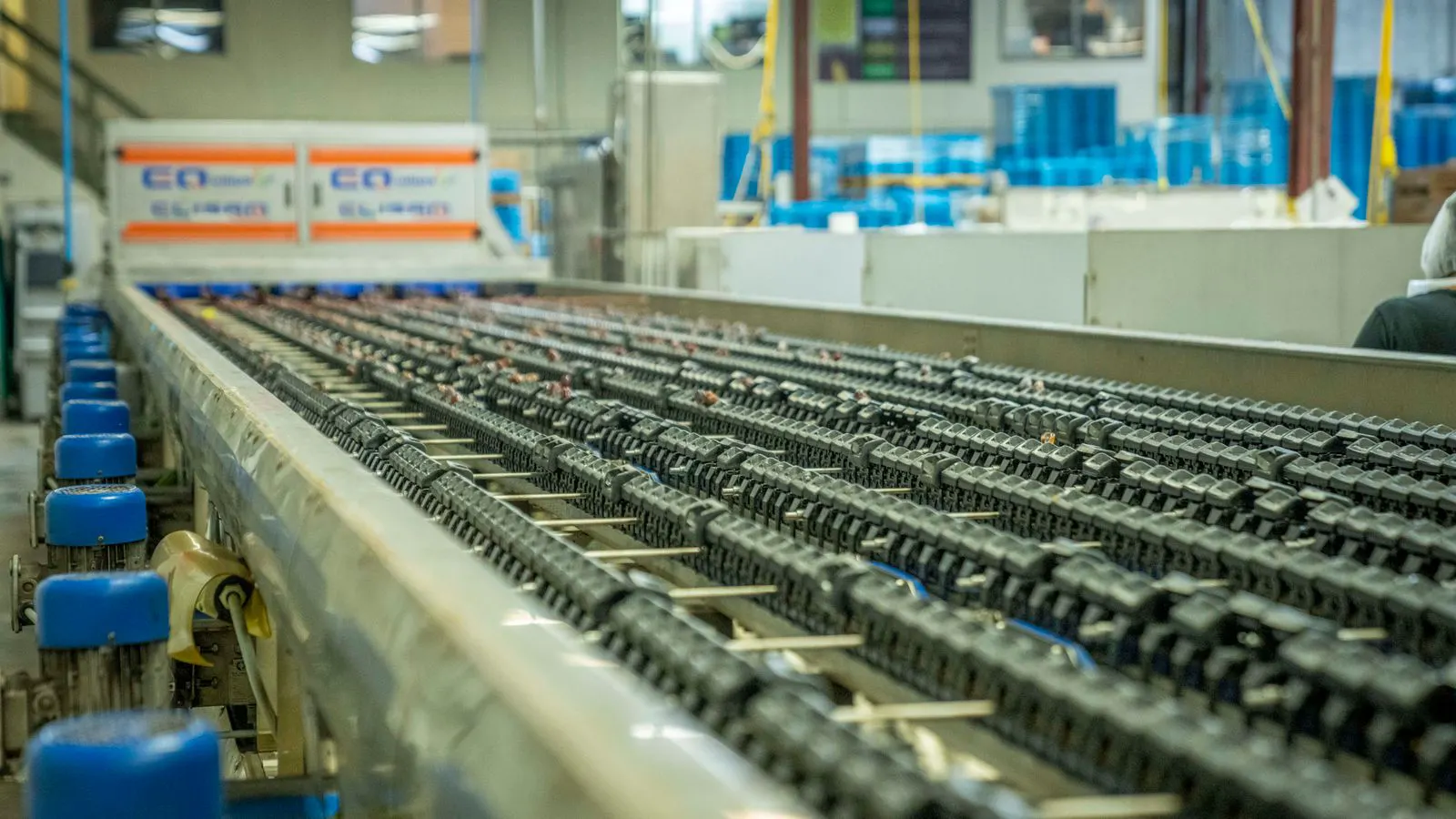
Labeling equipment budgets and delivery schedules depend on line speed, label material, and automation level. A clear RFQ specifying throughput, label size, and integration needs allows vendors to provide accurate pricing and realistic lead times.
- Labeling equipment pricing varies by automation level, label type, and required throughput.
- Equipment lead time depends on custom engineering, material availability, and vendor capacity.
- A detailed RFQ with specific line parameters reduces quote variance and delays.
- Comparing quotes requires matching specifications to avoid false equivalence.
- Budgeting for installation, training, and spare parts improves total cost accuracy.
What Sets the Baseline Cost
Labeling equipment costs reflect the work the machine must perform. A simple in-line applicator that places one label per unit on a straight conveyor will cost less than a high-speed rotary system that handles multiple label positions on curved bottles. The machine must match the product geometry, label material, and production rate.
Baseline cost includes the mechanical frame, drive system, sensor package, and control cabinet. It does not include installation, line integration, or software licenses for advanced data systems. Vendors may quote a base machine and then add options such as additional label heads, barcode verification, or PLC integration.
When estimating budget, identify the label type first. Paper labels, film labels, and shrink wraps behave differently on the line. Paper labels require precise pressure and speed. Film labels need tension control to prevent stretching. Shrink labels need heat or tension management. The label material changes the applicator design and the cost of the consumables.
How Throughput and Line Speed Affect Price
Throughput is the most direct driver of cost. A line running twenty bottles per minute requires a different mechanism than a line running three hundred bottles per minute. The applicator must accelerate, decelerate, and align labels at higher precision as speed increases.
High-speed lines often require servo-driven applicators rather than mechanical cam systems. Servo systems allow real-time adjustment based on sensor feedback. They cost more upfront but reduce misfires and downtime. The control cabinet also grows more complex to manage multiple axes and communication protocols.
If the line runs intermittent batches with different product sizes, the cost rises. Changeover time must be minimized. Quick-change jigs, programmable label stations, and flexible tooling add to the capital expense. A fixed line that handles one product type in one size runs cheaper to build and operate.
What Drives Lead Time for Custom Machinery
Equipment lead time is not a single number. It covers design, fabrication, assembly, testing, and shipping. Standard machines may leave the factory within weeks. Custom configurations with unique product dimensions or integration requirements take longer.
The longest delays usually occur in electrical and software work. Control programmers, sensor calibration, and line integration testing require time. If the machine must communicate with a MES, SCADA, or ERP system, software development and interface testing extend the schedule.
Material availability also affects delivery. Motor, servo, and sensor lead times vary by supplier. During peak manufacturing periods, component shortages can push delivery dates back. Vendors should provide a phased schedule that separates mechanical delivery from full system commissioning.
How to Write a Clear RFQ
A vague RFQ invites vague quotes. If you ask for a “labeling machine for bottles,” vendors will assume a standard configuration. If you ask for a specific model with a defined line speed and label size, they can price the exact solution.
Include the following in your RFQ:
- Product dimensions and material, including diameter, length, and weight.
- Label type, size, and position, with a sample label attached.
- Required line speed in units per minute, with a target range.
- Line direction and orientation, such as upright or horizontal.
- Integration requirements, including PLC protocol, barcode verification, or data logging.
- Installation environment, including floor space, power supply, and compressed air.
- Acceptance criteria, such as maximum misfire rate or label placement tolerance.
Attach a photo of the product and label. A 3D drawing helps if the product shape is complex. Specify the label supplier and material grade. This prevents vendors from guessing the tension requirements or adhesive behavior.
How to Compare Quotes Fairly
Vendors quote differently. One may include installation and training. Another may list those as extra services. One may quote the machine only. Another may include a service contract.
Before comparing prices, normalize the scope. Ask each vendor to confirm:
- Machine model and configuration.
- Included label heads and applicator types.
- Software licenses and data storage.
- Installation labor and travel costs.
- Training sessions and documentation.
- Warranty period and response time.
- Spare parts availability.
If two quotes differ by a small amount, the difference may be in the quality of the drive system or the sensor package. A cheaper machine that fails at high speed creates higher total cost. Review the mechanical design. Look for servo motors, precision encoders, and adjustable tooling.
Check the lead time against the cost. A machine available in six weeks at a higher price may be better than a custom unit available in fifteen weeks at a lower price. Production downtime during installation costs money. Factor that into the decision.
What to Budget Beyond the Machine Price
The machine price is not the final cost. Installation requires floor preparation, utility connections, and line modification. If the existing line uses a different voltage or control protocol, conversion work adds cost.
Spare parts and maintenance supplies should be budgeted. Label heads wear out. Sensors get dirty. Belts and gears need replacement. A vendor can quote a maintenance package, but you may prefer to buy parts directly. Either way, plan for annual consumables.
Training costs depend on operator skill. A basic line may need two hours of operator training. A complex line with data integration may require a full day of technical training. Include the cost of downtime during the training period.
How Lead Time Affects Production Planning
If the labeling machine replaces a manual process, the production impact is immediate. If it adds a new step to an existing line, the impact is phased. In either case, the delivery date determines when capacity increases.
Plan for a buffer. If the vendor quotes eight weeks, assume ten weeks. Shipping delays, customs clearance, and local installation issues add time. If the machine ships in sections, the assembly and testing phase extends the schedule.
Coordinate with the line operator and maintenance team early. They need to review the machine layout before it arrives. They need to confirm that the existing conveyor can support the additional load. They need to schedule the installation window.
Cost and Lead Time by Labeling Type
The table below summarizes typical cost and lead time drivers by labeling configuration. These are general patterns. Actual quotes depend on the specific product and vendor.
| Labeling Configuration | Cost Driver | Typical Lead Time Driver |
|---|---|---|
| Simple in-line applicator | Basic frame and mechanical drive | Standard parts and assembly |
| High-speed rotary applicator | Servo drive and precision sensors | Custom control programming and testing |
| Multi-position labeling | Additional label heads and tooling | Integration of multiple axes and sensors |
| Shrink wrap labeling | Heat and tension management | Material testing and line adaptation |
| Custom product geometry | Specialized tooling and alignment | Design approval and prototype testing |
Each configuration changes the budget. A simple in-line applicator may be a fraction of the cost of a multi-position rotary system. The lead time follows the same pattern. Custom work takes longer than standard work.
Common Mistakes in Budgeting
Buyers often underestimate the cost of line modification. The labeling machine may fit in the space, but the conveyor may need to be lengthened. The guardrail may need to be removed. The power supply may need to be upgraded.
Buyers also underestimate the cost of label testing. If the label material changes, the applicator settings change. If the product shape changes, the tooling changes. If the adhesive changes, the pressure changes. Plan for time to tune the machine after installation.
A common error is to compare only the machine price. If one quote includes installation and the other does not, the comparison is unfair. If one quote includes a two-year warranty and the other includes a one-year warranty, the comparison is incomplete. Normalizing the scope prevents this mistake.
Final Considerations for the Decision
The decision to buy labeling equipment should be based on total cost and total lead time, not just the sticker price. A machine that delivers in six weeks and requires minimal line changes may cost more upfront but save money in the short term. A custom machine that takes fourteen weeks may cost less but delay production capacity.
Review the vendor’s installation team. They should have experience with your product type and line speed. They should provide a detailed installation plan. They should confirm the acceptance criteria before they leave the site.
Confirm the spare parts program. If a label head fails during a production run, you need a replacement quickly. Ask about the lead time for spare parts and the cost of emergency service.
The goal is a machine that fits the line, the product, and the production schedule. A clear RFQ and a fair quote comparison make that decision easier. The budget and the delivery date should be realistic, not optimistic.
Frequently asked questions
What is the main factor that affects labeling equipment cost?
The main factor is the required throughput and label type. High-speed lines and complex label materials require more advanced mechanisms and cost more.
How long does it take to receive industrial labeling equipment?
Lead time depends on configuration. Standard machines may take a few weeks. Custom machines with integration work can take several months.
Should I include installation in the machine quote?
Yes. Installation labor, travel costs, and line modification should be included or clearly itemized. This prevents hidden costs during comparison.
What information is needed for an accurate labeling equipment quote?
Product dimensions, label size and material, line speed, and integration requirements. A sample label and a photo of the product help vendors price accurately.
How can I reduce labeling equipment lead time?
Use standard configurations where possible. Avoid custom tooling if the product fits standard dimensions. Confirm the installation window early to avoid scheduling delays.