Outlook: Compact Footprints for High-Volume Fillers
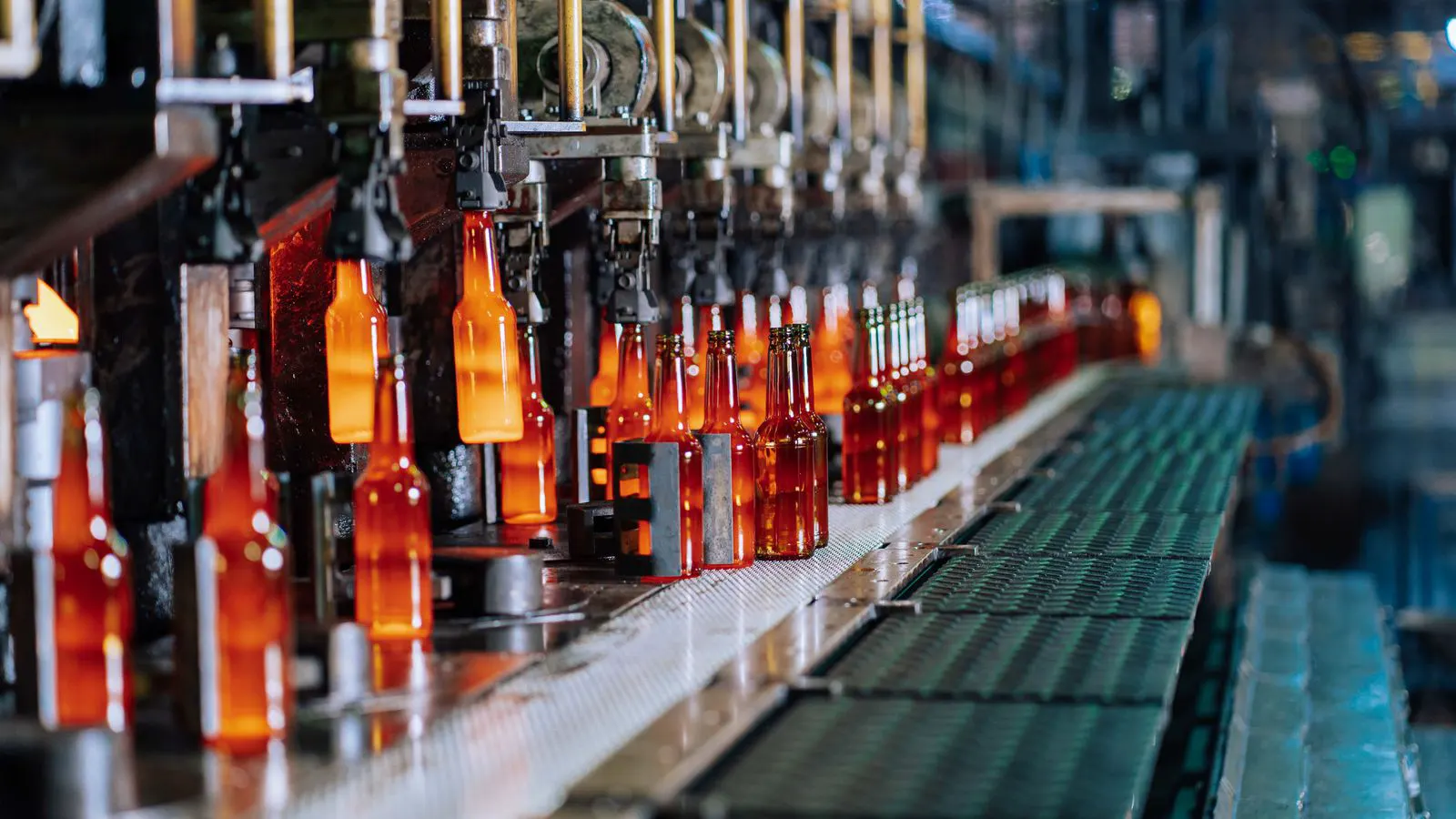
Compact fillers are reaching higher production capacity through denser mechanisms and tighter integration. Buyers should plan for smaller machine footprints, faster line speed, and tighter coordination between filling and capping stages.
- Compact fillers are moving toward tighter integration of filling, capping, and sealing stations to reduce overall machine size.
- Higher line speed now depends on synchronized conveyor and infeed systems as much as on the filler itself.
- Buyers should treat floor space as a design constraint, not an afterthought, when evaluating high-capacity machines.
- Smaller machines often require more precise alignment and tighter changeover procedures to maintain output.
- Future planning should focus on modular layouts that allow capacity upgrades without major floor relocation.
Why Compact Fillers Are Gaining Ground
Small footprint does not mean low output. The next generation of filling machines is being designed to deliver high production capacity inside a smaller machine size than previous models. This shift is driven by plant constraints, not by a single technology. Facilities are consolidating lines, reducing warehouse overhead, and trying to keep more SKUs active with less floor area. The result is a clear demand for machines that move more product per square meter.
The change is visible in the layout of the filling station itself. Older high-speed fillers often spread their functions over a long horizontal frame. A modern compact unit packs the same tasks into a shorter or more vertical arrangement. The filler head, product infeed, and discharge path are closer together. That reduction in span changes how the machine interacts with the surrounding line. The conveyor feeds and pulls in a tighter rhythm. The capping or sealing station can sit immediately after the filler without a long gap. The palletizer or case packer can move closer to the line. Every reduction in span removes a variable from the system.
Buyers should notice that the machine size is no longer just a physical measurement. It is a planning variable. A machine that fits on a 1.8 meter by 2.2 meter footprint may require a different infeed conveyor, a different capping station, and a different changeover procedure than a larger machine with the same output. The goal is not to shrink the machine for its own sake. The goal is to make the whole line more efficient in a smaller area.
What Drives the Shift Toward Higher Throughput in Small Spaces
Several forces are pushing fillers toward higher throughput without a proportional increase in machine size.
- Floor space is expensive. Plants pay for square meters, not for the theoretical maximum speed of a machine. A line that can handle 12,000 units per hour in a compact footprint is more attractive than a line that handles 18,000 units per hour but requires a much larger area.
- Product mix is changing. Many facilities run multiple SKUs on the same line. A compact filler that changes over quickly can handle a wider range of container sizes without losing much time.
- Line integration is becoming more common. Capping, labeling, and case packing are moving closer to the filling station. This reduces the distance product travels and lowers the chance of jams or misalignment.
- Operator skill is changing. Newer machines rely on tighter tolerances and more automated checks. The machine size shrinks because fewer manual adjustment points are needed.
These forces do not act in isolation. They reinforce each other. A plant that wants to run more SKUs on one line needs a filler that is fast and compact. The same plant that wants to reduce floor space needs a filler that can handle higher line speed without adding length. The result is a machine that is more integrated, more precise, and more demanding on the surrounding line.
How Machine Size Affects Line Speed
Machine size and line speed are not independent. A compact filler can run at high speed only if the rest of the line keeps pace. The infeed conveyor must deliver containers at the right rate and without gaps. The discharge conveyor must pull product at the same rhythm. The capping station must close the cap before the container moves too far. The case packer or palletizer must be ready to receive product in a steady stream.
When the machine size shrinks, the timing windows become tighter. A long gap between the filler and the capper gives the system some slack. A short gap leaves almost none. If the capper is slightly out of sync, the product may not receive a full cap, or the container may sit in the wrong position for the next station. This is why buyers should not evaluate a compact filler in isolation. The line speed is a property of the whole system, not just the filling head.
A practical check is to measure the container spacing at three points: at the infeed, at the filler, and at the discharge. If the spacing changes by more than a small tolerance between these points, the line is not ready for high speed. If the spacing is stable, the line has a foundation that can support a compact high-throughput filler.
What Buyers Should Prepare for in the Next Few Years
Buyers should plan for five shifts in how compact high-volume fillers are specified, installed, and maintained.
| Shift | What Changes | What the Buyer Should Do |
|---|---|---|
| Tighter integration | Filling, capping, and sealing move closer together | Review the capping station and case packer to ensure they can meet the shorter spacing |
| Higher precision | Tolerances on alignment and conveyor speed become narrower | Invest in better leveling, laser alignment tools, and conveyor speed controls |
| Faster changeover | Multiple SKUs on one line become more common | Standardize container sizes and develop quick-change tooling for the filler head |
| Smaller footprints | The machine itself takes up less floor area | Re-evaluate line layout and palletizer placement to take advantage of the saved space |
| More automated checks | Sensors and cameras monitor fill level and cap position | Plan for data integration and a clear procedure for responding to alarms |
These shifts are not optional. They define the difference between a compact filler that delivers its rated capacity and one that struggles to keep up. The buyer who prepares for these changes will see a shorter line, a clearer layout, and a machine that performs as expected. The buyer who treats the machine as a standalone unit will find that the line around it becomes the limiting factor.
How to Evaluate a Compact Filler for Your Plant
When evaluating a compact high-volume filler, the first step is to define the actual constraint. Is the constraint floor space, changeover time, or line speed? Each constraint points to a different feature. If floor space is the main issue, look at the machine footprint and the spacing requirements for the capping and case packing stations. If changeover is the issue, look at the number of manual adjustments and the availability of quick-release tooling. If line speed is the issue, look at the synchronization between the infeed and discharge conveyors and the ability to run at the target speed for the full shift.
The second step is to measure the current line. Record the container size, the fill volume, the target line speed, and the current machine size. This baseline gives you a reference point. Without it, any claim of improved capacity is hard to verify. The third step is to simulate the new layout. Place the compact filler on a sketch of the plant floor and add the infeed, discharge, capping, and case packing stations. Check the spacing. Check the access for maintenance. Check the path for the product. If the simulation does not work, the compact filler will not work in the real plant.
The fourth step is to review the maintenance requirements. Compact machines often have fewer moving parts in the filling area, but they may have more sensors and tighter tolerances. The maintenance plan should reflect this. A compact filler that is easy to install but hard to maintain will not deliver the expected production capacity over time. The buyer should ask about the expected downtime, the parts that are most likely to fail, and the training required for the maintenance team.
How to Prepare the Line for a Compact High-Volume Filler
Preparing the line is as important as selecting the machine. A compact filler with high throughput will expose weaknesses in the infeed and discharge systems. The conveyors must run smoothly. The product must flow without gaps or clusters. The capping station must be aligned to the container path. The case packer must be ready to receive product in a steady stream.
Start with the infeed. The product should arrive at the filler in a single file, at the correct speed, and with consistent spacing. If the infeed is unreliable, the filler will starve or overload. The buyer should test the infeed with the target container size and the target line speed before the compact filler is installed. The discharge is the same. The product should leave the filler without bouncing, tilting, or stopping. If the discharge is unstable, the capping station and case packer will suffer.
The capping station is often the weak point in compact lines. It must close the cap quickly and accurately. If the capper is too far away, the cap may be applied too late. If it is too close, the capper may interfere with the filler. The buyer should measure the distance between the filler and the capper and confirm that the capper can operate within that distance. The case packer or palletizer should be checked for the same reason. The product must arrive in a steady stream, or the case packer will jam.
Finally, the maintenance team needs to be ready. A compact high-volume filler will run at a higher rate, and any small deviation in alignment or speed will show up as a product problem. The maintenance team should be trained on the new machine, the new tolerances, and the new diagnostic tools. The buyer should document the alignment procedures and the changeover steps. These documents will save time during the first weeks of operation and will reduce the chance of a line stop.
How to Plan for Future Capacity Changes
A compact high-volume filler is not a one-time purchase. It is a platform for future changes. The buyer should plan for the possibility that the product mix will change, that the line speed will increase, or that a new station will be added. The layout should allow for these changes without a full relocation.
Modular design is the key. If the filler, capper, and case packer are on independent frames with standard connection points, the line can be reconfigured as needed. If the stations are welded into a single frame, the line is locked in place. The buyer should ask about the modular options and the cost of adding a station. A compact filler that can be expanded without a major rework is a better long-term investment than one that must be replaced when the product mix changes.
The buyer should also plan for data. A compact high-volume filler will generate more data than an older machine. The fill level, the cap position, the container spacing, and the line speed can all be measured. This data can be used to tune the line, identify problems early, and track performance over time. The buyer should ask about the data interfaces and the software that will be used to view and store the data. Without a clear data plan, the machine will be running without a feedback loop, and the production capacity will not be fully realized.
Final Thoughts on Compact High-Volume Fillers
The compact high-volume filler is a practical response to a clear set of plant constraints. Floor space is limited. Product mix is changing. Line integration is becoming more common. The buyer who understands these forces will specify the machine correctly and prepare the line to meet it. The buyer who treats the machine as a standalone unit will find that the line around it becomes the limiting factor.
The next step is to measure the current line and define the constraint. Then select a filler that matches the constraint and prepare the infeed, discharge, capping, and case packing stations to work within the tighter spacing. The result will be a line that moves more product per square meter and a machine that delivers the expected production capacity. The machine size is no longer a detail. It is the starting point.
Frequently asked questions
How much smaller can a high-throughput filler be?
Compact fillers are being designed to fit in a much smaller footprint than older models. The exact size depends on the container type, the fill volume, and the required line speed.
Can a compact filler run at the same speed as a larger filler?
Yes, but only if the infeed, discharge, capping, and case packing stations are synchronized and aligned to the tighter spacing. The machine size alone does not determine the line speed.
What is the biggest risk when installing a compact high-volume filler?
The biggest risk is that the line around the machine is not ready for the tighter timing windows. If the infeed or discharge is unstable, the compact filler will not deliver its expected capacity.
How should I choose a compact filler for multiple SKUs?
Look at the changeover time and the number of manual adjustments. A compact filler that can change over quickly and with standardized tooling will handle multiple SKUs better than one that requires many manual adjustments.
Do I need to upgrade my palletizer or case packer?
It depends on the spacing and the line speed. If the compact filler is placed closer to the capper and case packer, the case packer may need to be adjusted to receive product in a tighter rhythm. Check the spacing before installing the filler.