Manual vs Automatic Case Packer Comparison
Manual case packing suits low-volume or variable orders, while automatic case packers handle steady, high-volume production. This comparison covers speed, labor, accuracy, and equipment costs to help you select the right system.
- Manual packing offers low upfront cost and high flexibility for changing box sizes.
- Automatic case packers provide consistent speed and reduce labor strain for high-volume lines.
- Product mix, order size, and available space determine which solution fits best.
- Consider the total operating cost, including labor, errors, and maintenance, not just the machine price.
- A hybrid approach may work well during periods of growth or mixed production.
Choosing between manual and automatic case packing is a decision that affects labor costs, product safety, and throughput. Many facilities start with hand packing because it requires little capital and adapts quickly to small batches. As volume grows, the same process can become a bottleneck or a source of injury.
The right choice depends on your product type, order profile, and line layout. A small batch of heavy cases may suit a manual station. A continuous run of identical cartons usually favors an automatic case packer. Both methods have clear trade-offs in speed, accuracy, and long-term operating cost.
How manual case packing works
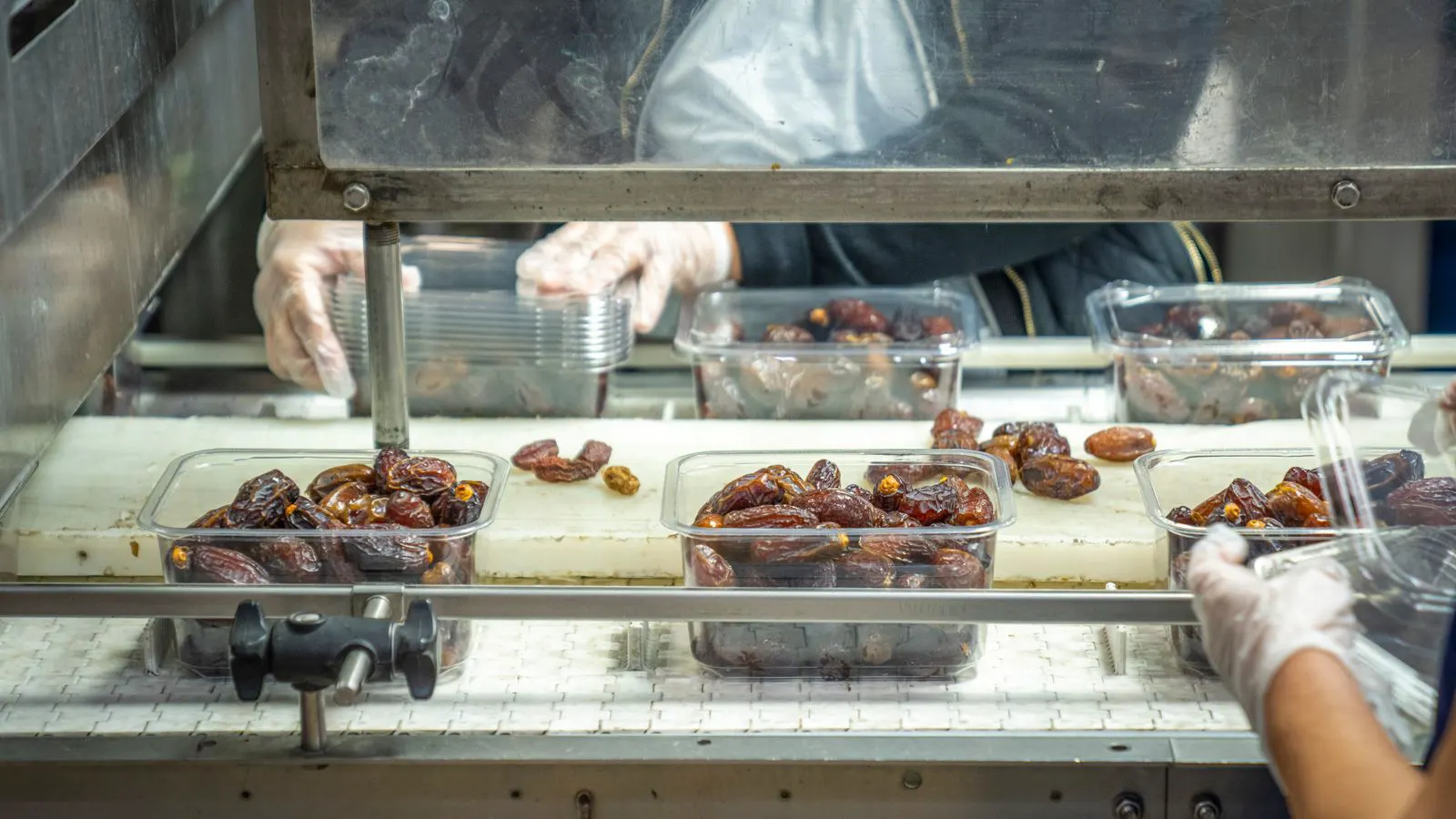
Manual packing uses a person to select, place, and close each carton. The worker stands at a table or a bench with a stack of empty boxes, a product feed, and a tape gun or closure tool. They load the case by hand, fold the flaps, and seal the box.
This method is common in warehouses, small distributors, and production lines with irregular order sizes. The worker controls the pace, so the process can stop and start without affecting other equipment. It also handles mixed SKUs well. If an order contains five different products, the operator can pick and place each one without reconfiguring a machine.
The main drawback is physical strain. Repetitive lifting and reaching can cause fatigue, especially when cases are heavy or the station is poorly positioned. Speed is limited by human endurance. A single operator may manage a certain number of cases per hour, but that number drops over long shifts. Error rates can also rise when workers rush or when box dimensions change.
Manual packing is not a failure mode. It is a practical tool for the right application. It works well when production is low, when product mix is wide, or when capital for automation is tight.
How an automatic case packer works
An automatic case packer uses conveyors, sensors, and mechanical arms to load and close cartons. The system typically draws empty boxes from a stack, feeds products from upstream, and positions the product inside the case. A closure mechanism folds and tapes the box, or a heat sealer joins the flaps.
The machine runs continuously at a fixed speed. Sensors detect case presence and product position. If a case is misaligned, the system may reject it or pause the line. This consistency is the main advantage. The output rate is stable, and the process does not depend on operator stamina.
Setup time is a key consideration. Automatic case packers are often designed for specific case sizes. Changing from a small carton to a large one may require swapping a frame or adjusting guides. This setup work is faster than retraining a worker, but it is not always instant. The line must be tuned for each product format.
Maintenance is another factor. Automatic case packers have motors, belts, sensors, and pneumatic or electric actuators. They need regular checks of belts, rollers, and tape heads. A small jam or a worn sensor can stop the line. However, when maintained properly, the system runs with predictable uptime.
Manual versus automatic case packer comparison
The table below summarizes the main differences between the two approaches.
| Option | Best for | Limitations |
|---|---|---|
| Manual packing | Low volume, mixed SKUs, variable box sizes | Slow, labor intensive, higher error risk |
| Automatic case packer | High volume, stable product mix, long shifts | Higher cost, setup time for size changes |
| Semi-automatic packer | Medium volume, teams that want speed gains | Requires operator input, slower than full auto |
| Hybrid line | Growing operations, seasonal peaks | More complex layout, higher initial planning |
Each option has a place. Manual packing is the baseline. Automatic packing is the scale-up path. Semi-automatic and hybrid setups sit in between, offering a stepwise improvement without a full line redesign.
When to choose manual case packing
Manual packing makes sense when your production volume is low or when the product mix changes frequently. If you run small batches of different SKUs, a worker can adapt quickly. There is no need to reconfigure a machine for each new box size. The operator simply uses a different empty carton from the stack.
This approach is also suitable for facilities with limited capital. The upfront cost is low. You need a table, lighting, a box dispenser, and a closure tool. The main investment is labor. If your team is already skilled and the volume is manageable, manual packing can be efficient enough.
Consider manual packing when your line already has bottlenecks elsewhere. If the upstream filler or the downstream palletizer is the constraint, adding a fast case packer may not help. In that case, a manual station may be sufficient to keep the line balanced.
Another reason to choose manual packing is product fragility. Some items are delicate and require careful placement. A human can adjust grip and positioning in ways a rigid mechanical arm cannot. If the product is soft, irregular, or easily damaged, manual handling may reduce breakage.
When to choose an automatic case packer
An automatic case packer is the better choice when volume is high and the product mix is stable. If you run the same case size for hours at a time, the machine can maintain a consistent rate. The operator can monitor the system instead of handling every box.
This option is especially useful when labor costs are high or when finding skilled packers is difficult. An automatic case packer reduces the need for repetitive manual work. It also lowers the risk of injury from lifting and reaching. The machine handles the heavy parts, and the operator manages exceptions.
Stability in product dimensions is a key requirement. The machine works best when the case size, product height, and load pattern are predictable. If the product mix changes every hour, the setup time can eat into the benefits of automation. In those cases, a manual or semi-automatic setup may be more flexible.
Cost and labor considerations
The total cost of ownership is more important than the purchase price. A manual packer has no machine cost, but it requires ongoing labor. An automatic case packer has a higher upfront cost but can reduce labor demand over time.
Consider the number of operators needed per shift. A manual station may require one or two workers to keep up with the line. An automatic case packer may run with a single operator who handles setup, monitoring, and minor adjustments. If your labor budget is tight, the machine can pay for itself through lower headcount.
Error costs also matter. Manual packing can lead to wrong items, damaged products, or incomplete cases. Each error consumes time to correct and may affect customer satisfaction. Automatic case packers reduce these errors through consistent placement and sensor checks. However, they can also reject good product if a sensor is misaligned.
Maintenance costs are part of the picture. Manual packing has minimal equipment to maintain. Automatic case packers require belts, sensors, and tape heads to be checked regularly. Budget for routine service and spare parts. A well-maintained machine will have lower downtime and better output.
Space and layout factors
The physical layout of your facility affects the choice. Manual packing requires a workstation with room for the operator, the box stack, and the product feed. It can fit in a tight corner. Automatic case packers need more space for conveyors, the machine frame, and access for maintenance.
If your floor is already full, adding an automatic case packer may require moving other equipment. The line needs a clear path for the case to enter and exit. The stack of empty boxes must be accessible. The finished cases need a destination, whether a conveyor or a pallet.
Manual packing is easier to move. If your production changes, you can relocate the table and the operator. An automatic case packer is fixed in place. Moving it is costly and disruptive. Plan the layout carefully before deciding.
A practical decision path
Start with your volume. If you pack less than a few hundred cases per hour, manual packing is likely sufficient. If you exceed that and run consistently, automatic packing becomes attractive.
Next, look at your product mix. If you switch box sizes every hour, manual or semi-automatic may be better. If you run one size for several hours, automatic packing can maintain speed.
Then, consider your labor. If labor is expensive or hard to find, automation can reduce the workforce. If labor is cheap and available, manual packing may be more flexible.
Finally, review your space. If you have room for a conveyor and a machine, automatic packing is viable. If your floor is tight, a manual station or a compact semi-automatic unit may fit better.
FAQ
Q: How long does it take to set up an automatic case packer for a new box size?
A: Setup time depends on the machine design and the size change. A small adjustment may take minutes, while a change to a significantly different case format can require more time.
Q: Can manual packing handle heavy products?
A: Yes, but it increases the risk of injury. Heavy cases require careful lifting and positioning. Consider ergonomic tools or a semi-automatic aid if the load is heavy.
Q: What is the main advantage of an automatic case packer over manual packing?
A: The main advantage is consistent speed and reduced labor strain. The machine can run continuously at a fixed rate without operator fatigue.
Q: Should I choose a semi-automatic case packer?
A: A semi-automatic packer is a good middle ground. It speeds up the process while leaving some manual control. It is useful when volume is moderate or when the product mix changes.
Q: How do I reduce errors in manual packing?
A: Use clear labeling, good lighting, and a defined workflow. Train the operator on the correct load pattern. Check the case before sealing to ensure all items are present.
===END===