Outlook: Hygiene Requirements for Liquid and Powder Fillers
Hygiene requirements for filling machines are tightening. Buyers should plan for stricter food safety, packaging regulations, and future standards. This outlook covers five shifts and practical preparation steps for liquid and powder lines.
- Hygiene requirements are moving from visual checks to documented, data-backed verification.
- Powder fillers face specific challenges with dust, allergens, and material contact.
- Future standards will likely demand greater traceability and automated cleaning records.
- Food safety rules are expanding to cover machine design, not just operation.
- Early planning reduces retrofit costs and keeps lines compliant.
Why Hygiene Requirements Are Tightening in Filling
Hygiene requirements for liquid and powder filling machines are moving beyond surface-level cleaning. The pressure is coming from multiple directions at once. Food safety expectations are rising, packaging regulations are expanding, and future standards are shifting toward digital traceability. For liquid and powder fillers, this means the machine itself becomes part of the compliance story.
Buyers who only look at throughput and fill accuracy are missing a growing cost center. A line that fills fast but cannot prove a clean cycle is a liability. The next few years will reward machines that make hygiene easier to verify, not harder.
The shift is practical. Plants are being asked to show evidence, not just claims. That evidence comes from design, documentation, and maintenance habits. It also comes from how well a machine handles product residue, allergen cross-contact, and cleaning verification.
Consider a plant that fills both a dairy product and a soy-based alternative on the same line. In the past, a thorough wash and a visual check might have been sufficient. Today, the auditor asks for a log of the cleaning steps, the temperature of the water used, and the time between the last product run and the first run of the next product. The machine must support this evidence. If the machine does not have the sensors or the software to record the cycle, the plant is relying on operator memory and paper logs. Those are weak points in an audit.
What Buyers Should Expect From New Packaging Regulations
Packaging regulations are moving beyond the container. They are reaching into the filling process. Expect rules that require clearer separation of contact parts from non-contact parts. Expect documentation requirements for every material that touches product.
For liquid fillers, this means more attention to gaskets, seals, valves, and pump internals. For powder fillers, it means greater focus on hopper liners, augers, screw components, and discharge nozzles. The regulatory logic is simple: if a part can contact product, it must be identified, cleaned, and verified.
One practical change is the rise of material declarations. Vendors will be asked to provide full material lists for product-contact components. Buyers should start requesting these now. If a machine has proprietary coatings or unlisted elastomers, the compliance risk sits with the plant.
Imagine a machine with a pump that uses a proprietary seal compound. The vendor may not declare the elastomer type in the standard documentation. If a regulatory body asks for the material composition of every part that touched the product, the plant is stuck. It cannot provide the data. This creates a delay in production or a failure in an audit.
Another shift is toward allergen and contaminant traceability. Future standards will likely require that cleaning cycles be tied to specific product runs. This means the machine should be able to log which product was last filled, what cleaning steps were performed, and when the next fill is authorized.
For example, a powder filler that switches from wheat flour to rice flour must record the switch. It must record the cleaning time, the cleaning agent used, and the verification step, such as a visual check or a swab test. The next run of rice flour should only be authorized if the system confirms the previous run is fully cleared.
The Five Shifts Buyers Should Plan For
-
From visual checks to verified cleaning.
Operators will no longer be the final proof of cleanliness. Sensors, time-based cycles, and documented logs will carry more weight. -
From generic hygiene to product-specific protocols.
A syrup line and a water line will not share the same cleaning assumptions. A flour line and a spice line will not share the same allergen controls. -
From manual records to digital traceability.
Paper logs will become less acceptable. Expect software-driven cleaning records that tie to batch numbers and product codes. -
From end-of-line cleaning to in-process hygiene monitoring.
The focus will move up the line. Residual product detection and early warning systems will become standard features. -
From retrofit compliance to design-for-hygiene.
New machines will be expected to make cleaning easier by default. Buyers will compare vendors on design, not just on whether a cleaning kit is included.
Each of these shifts has a cost implication. The early mover can standardize on a clean, documented process. The late mover will find itself retrofitting sensors, changing procedures, and revalidating cleaning cycles.
Consider the shift from visual checks to verified cleaning. An operator cleans a nozzle and says it is clean. In the future, the system will record the nozzle temperature, the flow rate of the sanitizer, and the duration of the wash. The operator’s signature will be one part of the proof, but the data will be the primary evidence.
Powder Fillers Face Specific Hygiene Pressures
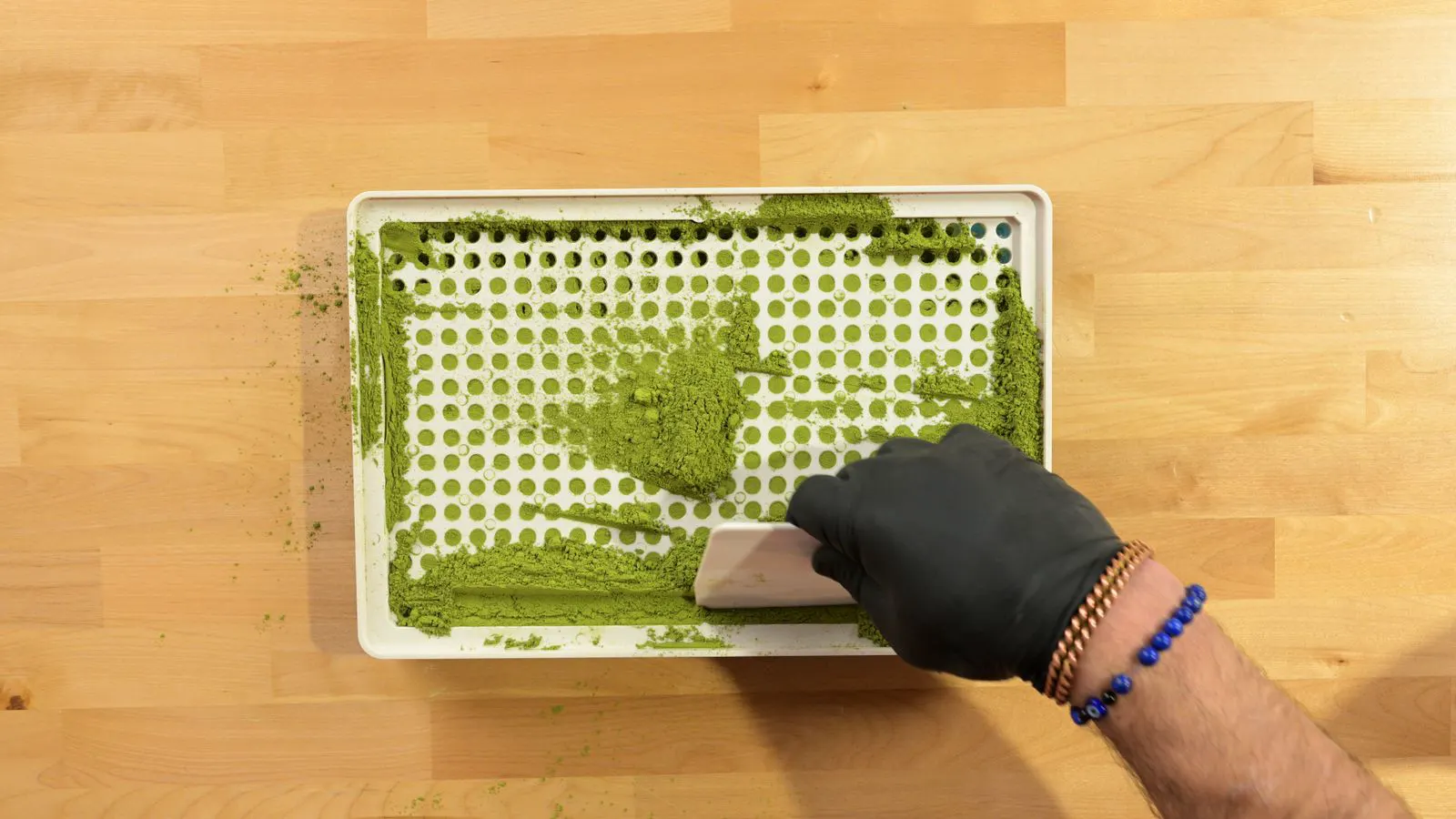
Powder filling is more sensitive to residue than many buyers realize. Fine particles lodge in threads, crevices, and valve seats. They can also carry allergens or contaminants that are hard to remove with a quick wash.
The main hygiene risks in powder fillers are:
- Incomplete removal of material from the discharge path
- Cross-contact between allergenic and non-allergenic powders
- Dust accumulation in electrical enclosures and control panels
- Degradation of seals and liners that trap product
Buyers should expect future standards to require more frequent verification of powder lines. This may mean more frequent swab tests, more detailed cleaning records, and stricter changeover procedures.
A practical step is to review the machine’s changeover time. If changing from a high-allergen powder to a low-allergen powder takes longer than the cleaning window allows, the line is at risk. The machine should support a defined changeover sequence with clear checkpoints.
For instance, a machine that fills peanut butter powder and then switches to a non-nut powder must have a rigorous cleaning protocol. The auger, the screw, and the discharge nozzle must be free of peanut residue. A simple brush may not be enough. The machine may need a dedicated cleaning cycle with a specific agent or a physical inspection of the auger teeth.
Liquid Fillers Face Different but Equally Real Risks
Liquid fillers have their own hygiene challenges. The main risks are product residue in the pump, nozzle, and valve body. They also include microbial growth in stagnant areas, especially if the line is not fully drained or flushed.
For high-sugar or high-viscosity liquids, residue is the primary concern. It is sticky, it is hard to remove, and it can create a breeding environment. For water-based products, the risk is more about microbial control and biofilm formation.
Future standards will likely require clearer drainability. A machine that holds liquid in dead legs or unflushed channels is a compliance problem. Buyers should evaluate the machine’s ability to be flushed with clean water or sanitizer and to drain completely.
The nozzle and valve area is the highest-risk zone. These parts are small, they contact the container, and they are difficult to inspect. A machine that allows rapid nozzle removal for inspection and cleaning will be easier to keep compliant.
Consider a line that fills a thick syrup. The syrup cools and hardens in the nozzle. If the nozzle is not designed for easy removal, the cleaning team must use tools to scrape the residue. This increases the risk of damage and the time required. A machine with quick-release nozzles can be cleaned faster and more thoroughly.
A Practical Preparation Checklist
| Area | Action | Why It Matters |
|---|---|---|
| Product-contact parts | Request a full material list from the vendor | Ensures all parts are identified and declared |
| Cleaning cycle | Document the current cycle and its verification method | Creates a baseline for future compliance |
| Allergen controls | Define changeover procedure for allergenic products | Reduces cross-contact risk |
| Digital records | Evaluate whether the machine supports batch-linked logs | Prepares for traceability requirements |
| Drainability | Test whether the line drains and flushes fully | Prevents stagnant product and microbial growth |
| Inspection access | Check whether nozzles, valves, and seals are easy to remove | Reduces cleaning time and human error |
This checklist is not a one-time exercise. It should be revisited every time the product mix changes or a new regulation is issued. The goal is to keep the machine and the process aligned.
How to Talk to Vendors About Hygiene
When evaluating a filling machine, ask specific questions. Generic answers are a red flag.
- Can you show me the material list for all product-contact components?
- What is the cleaning cycle, and how is it verified?
- Can the machine log cleaning steps tied to a product batch?
- How do you handle allergen changeover?
- What is the drainability design, and can you demonstrate a full flush?
- What sensors or checks are included for residual product detection?
A strong vendor will answer these without hesitation. They will explain the design intent, not just the feature list. They will show you how the machine supports a documented hygiene process.
If a vendor cannot provide a material list or a cleaning verification method, treat that as a risk. You can always add cleaning procedures later. You cannot easily change the material of a seal or the geometry of a dead leg.
What to Do Now
The best time to prepare is before the next major audit or regulatory update. Start with a review of your current lines. Identify which machines are easiest to clean and document. Identify which ones are the most difficult.
For the difficult machines, consider whether a retrofit is feasible or whether a replacement is the better long-term move. For the easier machines, invest in better documentation and digital records.
The goal is simple: make hygiene visible, measurable, and repeatable. A machine that supports that is a machine that will age well under future standards.
Frequently asked questions
What is the biggest hygiene risk in powder filling lines?
The biggest risk is incomplete removal of fine particles and allergens from the discharge path and valve seats. This can lead to cross-contact and contamination.
How will packaging regulations change for liquid fillers?
Expect regulations to require clearer drainability, better flushing, and documented cleaning cycles. The focus will shift from visual checks to verified, data-backed hygiene.
Do I need to upgrade my machine to meet future standards?
It depends on your current machine's design. If it supports documented cleaning, material declarations, and batch traceability, it may be sufficient. If not, a retrofit or replacement may be needed.
What is the role of digital records in hygiene compliance?
Digital records tie cleaning steps to specific product batches. They provide an auditable trail that regulators and customers can review. They reduce the risk of human error.
How should I handle allergen changeover on a filling machine?
Define a clear changeover procedure with defined checkpoints. Use swab tests or other verification methods where required. Document the process and review it after each changeover.