Explainer: Syrup vs Water Filling in Glass Bottles
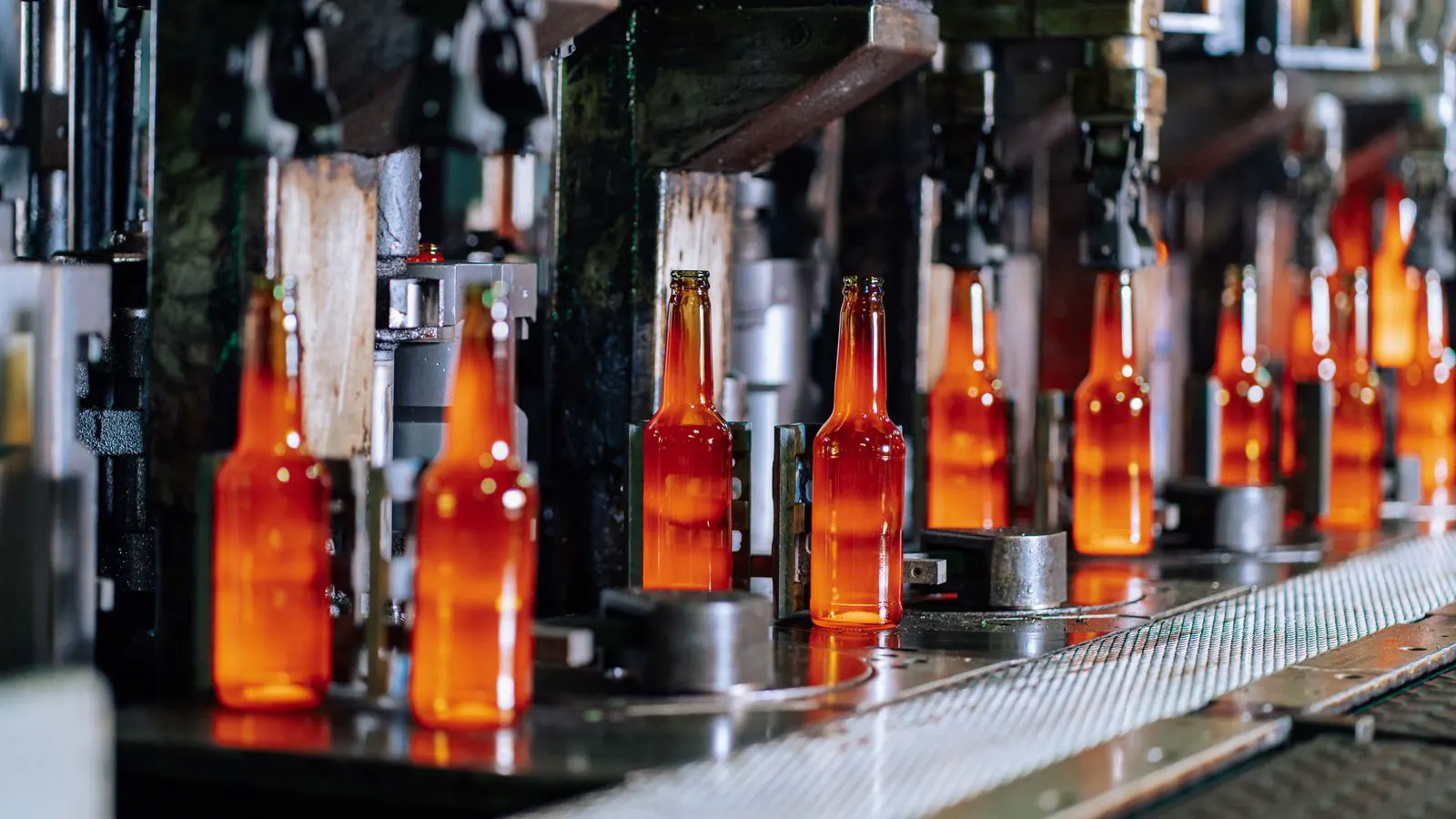
Syrup filling requires different equipment and settings than water filling because high viscosity changes flow dynamics. This guide explains how liquid viscosity impacts filling accuracy, machine selection, and process controls for glass bottle lines.
- High viscosity liquids like syrup resist flow and require different filling technology than low viscosity liquids like water.
- Filling accuracy depends on nozzle design, pressure control, and the speed at which the bottle moves.
- Machine selection for syrup filling often requires a larger bore, higher pressure, or slower cycle times to maintain consistent fill levels.
- Testing with the actual product is necessary before finalizing line speed and machine specifications.
Why Syrup Filling Differs From Water Filling
Water flows easily. It has low viscosity and moves quickly under gravity or pressure. Syrup behaves very differently. It is thick, sticky, and resists movement. This difference changes how a filling machine must operate. A machine set for water will struggle with syrup. It may drip, fill unevenly, or take too long per bottle.
The core issue is fluid resistance. When you move a liquid through a narrow pipe, the thicker it is, the more force is needed to push it out. For glass bottle filling, this means the filling nozzle, the pump or gravity feed system, and the timing of the fill cycle all need adjustment.
Consider a standard rotary filler designed for carbonated drinks. The nozzles are narrow to minimize splash and to allow rapid cycle times. When that same machine is pointed at apple cider vinegar or a thick berry syrup, the fluid sticks to the inner walls of the nozzle. The liquid does not slide out; it clings. If the operator keeps the conveyor speed constant, the bottle moves away from the nozzle before the syrup has finished draining. The result is a bottle with a visible gap at the top and a wet, sticky mess on the filler head.
This is not a quality control failure; it is a physical mismatch. Water has a specific gravity close to one and a viscosity measured in centipoise that is very low. Syrup can be ten, twenty, or even fifty times thicker. The machine does not know the difference. The operator must tell it.
How Liquid Viscosity Affects the Fill
Viscosity is a measure of a fluid’s resistance to flow. Water has a low viscosity. Syrup, honey, or molasses has a high viscosity. In a filling line, this creates two main problems.
First, the liquid does not stop moving immediately when the nozzle valve closes. Water stops quickly. Syrup may keep flowing for a fraction of a second after the valve shuts. This causes overfilling or drips into the bottle neck.
Second, the liquid may not start moving quickly enough when the valve opens. If the bottle is moving on a conveyor, the syrup needs time to reach the nozzle and begin filling. If the machine is too fast, the bottle moves away before enough product has entered it.
These issues directly impact filling accuracy. You cannot use the same settings for both products.
Think about the physics of the cutoff. In a low-viscosity product, the valve closes, and the pressure wave stops the flow almost instantly. In a high-viscosity product, the fluid has momentum. The syrup inside the nozzle continues to slide down the bottle’s neck even after the internal gate has sealed. Because the syrup is heavy, it pulls the remaining liquid out of the pipe. If the control system does not account for this “tail flow,” the machine will consistently overfill by a few milliliters. Over time, this leads to cap leaks or a messy top.
There is also the issue of start-up lag. When the valve opens, water rushes out immediately. Syrup requires pressure to initiate flow. If the bottle is in a rotary filling head that rotates quickly, the syrup may not reach the bottom of the bottle in time. The bottle leaves the station half-full, and the next bottle arrives before the first one is done.
These two problems, tail flow and start-up lag, create a window where accuracy is lost. The machine must be tuned to open the valve later and close it earlier than it would for water.
Choosing the Right Filling Method
There are two main ways to fill viscous liquids in glass bottles. The choice depends on your production volume and the specific viscosity of your syrup.
Gravity filling uses the weight of the liquid to push it into the bottle. It works well for low to medium viscosity liquids. It is simple and clean. However, as viscosity increases, gravity filling slows down. The liquid may not drain fully from the nozzle, leaving residue.
Pneumatic or piston pumping forces the liquid out of the nozzle. This method works better for high viscosity syrups. The pump creates positive pressure, pushing the syrup into the bottle regardless of its thickness. It allows for faster fill times and better control over the fill volume.
Most commercial syrup filling lines use a combination of both. Gravity helps the liquid reach the nozzle area, and a pump or pressurized system forces it into the bottle.
Gravity filling is often the default for lines that fill juices or light syrups. The tank sits above the filler, and the liquid flows down the dip tube into the bottle. It is cheap to maintain because there are no pumps to wear out. But if the syrup is thick, like maple or corn syrup, gravity alone is often too slow. The liquid forms a plug in the nozzle and does not break cleanly.
Piston pumping uses a mechanical piston to push the syrup out of a chamber. This is common for high-viscosity products like honey or thick cream fillers. The piston pushes the liquid into the bottle with force. This overcomes the resistance of the thick fluid. The downside is that pistons wear out. They require regular replacement of seals and O-rings. They also require more maintenance than gravity heads.
A hybrid system is often the best solution. The syrup is pumped from the tank to a buffer tank or a head tank that sits just above the filling head. From there, gravity feeds the syrup into the nozzle. This ensures the nozzle is always full. When the bottle arrives, the syrup is already positioned to fall. Some systems use a small pneumatic assist valve that opens briefly to push the last of the syrup out. This prevents the plug from forming and ensures a clean cutoff.
Machine Selection for Glass Bottle Filling
When sourcing a machine for syrup filling, look at the nozzle design first. A standard narrow nozzle works for water but chokes for syrup. You need a larger diameter opening. This reduces the friction the syrup faces as it exits the machine.
The filling head height matters too. For viscous liquids, the nozzle should be close to the bottle mouth. A shorter distance means less time for the syrup to fall, reducing the chance of splashing or uneven filling.
Also consider the bottle orientation. Some machines tilt the bottle upside down to empty the nozzle. This is effective for syrup but adds mechanical complexity and cycle time. Other machines use a “pull-down” method where the bottle moves into the nozzle and then away.
Nozzle diameter is the single most important mechanical change. If you are moving from water to syrup, you will likely need to double the inner diameter of the nozzle. A standard water nozzle might have an opening of 3 to 5 millimeters. For thick syrup, you may need 10 to 15 millimeters or more. This larger opening allows the syrup to flow with less resistance. It also makes it easier to clean. A small, clogged nozzle is a major source of downtime. A large, open nozzle is easier to flush with water or a cleaning solution.
The height of the filling head above the bottle neck also changes. With water, the nozzle can be higher because the liquid falls quickly. With syrup, the drop distance must be short. If the nozzle is too high, the syrup splashes. Glass bottles are rigid, so splashing can lead to breakage or product loss. A low, close fitting nozzle reduces the fall distance to a few millimeters. This ensures the syrup enters the bottle quietly and fills from the bottom up, rather than splashing across the mouth.
Bottle orientation is another critical factor. Some fillers use a “bottom-up” fill where the bottle is inverted. The syrup falls into the bottom of the bottle, and the air escapes from the top. This is very accurate for viscous liquids because it removes the air bubble that often sits at the top of a bottle during a standard top-down fill. However, inverting bottles on a high-speed line is mechanically difficult. It requires precise timing and strong grippers. If your line speed is moderate, an inverted fill is a great option. If your line is high-speed, a standard top-down fill with a low nozzle is often more practical.
The “pull-down” method is a third option. The bottle moves into the nozzle and then down. This method is common for very thick products. The nozzle follows the bottle down, ensuring the syrup is pushed into the bottle as it fills. It is slow but extremely accurate.
A Worked Example of Line Setup
Imagine a plant switching from filling water to filling a medium-thick fruit syrup. The existing machine uses a standard rotary filling system with narrow nozzles.
The first change is the nozzle size. The plant installs nozzles with a larger inner diameter. This allows the syrup to flow with less resistance.
The second change is the fill speed. The line slows down. The bottles now take longer to pass under each nozzle. This extra time gives the syrup time to enter the bottle and settle.
The third change is the valve timing. The machine’s control system is adjusted to close the valve slightly earlier than it did for water. This compensates for the fact that syrup continues to flow a bit after the valve shuts.
The result is a consistent fill level. The plant achieves the same accuracy it had with water, but with a slower cycle rate.
Let’s look at the details of this transition. The plant had a line running at 12,000 bottles per hour for water. When they switched to a thick peach syrup, the line immediately failed. The bottles were underfilled by an average of 15 milliliters. The nozzles were clogged with dried peach pulp.
The engineer first replaced the 4mm nozzles with 12mm nozzles. This was a major change. It required new nozzle plates and new seals. The larger opening allowed the syrup to flow without clogging.
Next, the line speed was reduced to 6,000 bottles per hour. This gave the syrup twice as much time to fill. The bottles now had enough time to accept the full volume before moving to the next station.
Finally, the valve timing was adjusted. The control system was reprogrammed to close the valve 10 milliseconds earlier than it had for water. This small change accounted for the tail flow of the syrup. The overfill issue disappeared.
The plant also installed a small heater around the syrup tank. The syrup was often cold from the refrigerator, which made it even thicker. Heating the syrup to 25 degrees Celsius reduced the viscosity by 40 percent. This allowed the line to run slightly faster than the initial trial, reaching 7,500 bottles per hour.
This example shows that switching products is not just a change of liquid. It is a change of physical conditions. The machine must be tuned to match the new fluid.
Key Checks Before Finalizing Machine Specifications
Before buying or retrofitting a machine, run a product test. Use the actual syrup in the actual glass bottles. Do not rely on water or a thin substitute. Viscosity changes with temperature. A syrup that is thick in winter may flow better in summer. Your machine must handle the worst-case scenario.
Check the following:
- Nozzle diameter: Is it large enough for the syrup’s thickness?
- Fill cycle time: Does the line move slowly enough for the liquid to settle?
- Valve response: Does the valve close quickly to stop the flow?
- Residue cleanup: How much syrup sticks to the nozzle after each cycle?
- Bottle compatibility: Do the glass bottles have enough neck space for the syrup to flow without splashing?
If the syrup leaves residue on the nozzle, the fill accuracy will degrade over time. The machine will start overfilling as the nozzle clogs with dried product.
Product testing is the most important step. Many buyers make the mistake of specifying a machine based on the product name rather than the physical properties. A “light syrup” can still be 10 times thicker than water. A “thick syrup” can be 50 times thicker. The machine must be specified based on the viscosity measured in a viscometer, not the label on the bag.
Temperature is a critical variable. Syrup viscosity is highly sensitive to temperature. At 15 degrees Celsius, a syrup might have a viscosity of 500 centipoise. At 35 degrees Celsius, it might drop to 200 centipoise. If the machine is set for the cold temperature, it will work fine in winter but may overfill in summer. If it is set for the warm temperature, it will underfill in winter. The best practice is to design the machine for the coldest possible temperature and use a heater to bring the syrup up to a consistent temperature before filling.
Bottle compatibility is often overlooked. Glass bottles have different neck profiles. Some have a wide neck, some have a narrow neck. The syrup must flow into the neck without splashing. If the bottle neck is too narrow, the syrup will back up in the nozzle. If the bottle is too tall, the syrup may not fill the bottom before the bottle moves. Test the actual bottle. Do not assume that a bottle that works for water will work for syrup.
Troubleshooting Common Filling Issues
Poor filling accuracy in syrup lines usually points to one of three causes.
The first is insufficient nozzle size. If the syrup flows slowly, the bottle may move away before it is full. The solution is to increase the nozzle diameter or reduce the line speed.
The second is valve lag. If the valve takes too long to close, the syrup keeps flowing. This causes overfill. You may need a faster-acting valve or a different valve type.
The third is temperature variation. Cold syrup is thicker. If the product comes into the line cold, it will not flow well. Heating the syrup slightly before filling can solve this, but it may affect product quality.
Always check these three areas when accuracy drops on a viscous line.
When accuracy drops, do not just tighten the settings. Look at the physical state of the machine. Check the nozzle for clogs. A small piece of dried syrup can reduce the effective diameter of the nozzle by 50 percent. This causes the syrup to flow slowly and the bottle to underfill. Cleaning the nozzle is often the first step in troubleshooting.
Next, check the valve response. Listen to the valve. If it makes a slow, sputtering sound as it closes, the valve is sticking. This can happen if syrup has dried on the valve seat. A slow-closing valve allows the syrup to flow for an extra 50 milliseconds. This extra flow causes overfill. Replacing the valve seat or cleaning it can solve this.
Finally, check the temperature. If the line is running in a cold room, the syrup will thicken. If the syrup tank is not heated, the syrup will be cold and thick. This will cause the line to slow down. The operator may try to speed up the line to compensate, which makes the problem worse. The correct solution is to heat the syrup. This requires a heated jacket on the tank and a temperature controller. It is a significant investment, but it is necessary for consistent performance.
Impact on Sealing and Line Integration
Filling and sealing are linked. If the syrup fills unevenly, the cap may sit at a different height on each bottle. This can affect how the sealer applies pressure. A sealer designed for flat, uniform liquid levels may struggle with a slightly overfilled or underfilled bottle.
For glass bottle filling, the sealer must be able to handle the slight variations in fill height. Some sealers have adjustable pressure plates that compensate for small differences. If your syrup filling is inconsistent, your sealing accuracy will suffer.
Test the entire line, from filling to sealing, using the actual product. Do not validate the filler and sealer separately.
Sealing is a sensitive process. The sealer applies pressure to the cap to create a seal. If the bottle is overfilled, the liquid is close to the neck. The cap may push into the liquid, causing the sealer to apply uneven pressure. If the bottle is underfilled, there is a large gap between the liquid and the cap. The cap may float or twist, causing a poor seal.
This is why the filler and sealer must be integrated. The filler must produce a consistent fill level. The sealer must be able to handle the variations. If the filler is not consistent, the sealer will fail. If the sealer is not sensitive enough, it will fail even if the filler is consistent.
When testing the line, measure the fill level of each bottle. If the variation is more than 1 milliliter, the sealer will likely have problems. The goal is to reduce the fill variation to less than 0.5 milliliter. This requires precise valve timing and a stable syrup temperature.
Also, check the cap torque. If the syrup is thick, it may stick to the cap threads. This can cause the cap to be overtightened. An overtightened cap is difficult for the consumer to open. It can also cause the cap to break when removed. This is a common quality issue in syrup lines. The solution is to ensure the syrup does not flow into the cap threads. This requires a nozzle design that stops the syrup before it reaches the threads.
Final Thoughts on Product-Specific Design
Syrup filling is not a minor adjustment. It is a different process. The physics of thick liquids demand different mechanical solutions. If you are buying a machine, specify the product’s viscosity and the glass bottle dimensions. Do not assume a machine set for water will work with syrup with minor tweaks.
The goal is a consistent fill level. To achieve that, you must match the machine’s speed, nozzle size, and valve timing to the physical properties of the liquid. This is why product testing is the most valuable step before finalizing any filling line.
Do not buy a machine based on the speed rating alone. A machine rated for 20,000 bottles per hour for water may only run at 8,000 bottles per hour for thick syrup. The speed rating is not a universal measure. It is a measure of the machine’s capability for a specific product. When specifying a machine, ask the supplier for the speed rating for your specific viscosity. If they cannot provide it, do not buy the machine.
The machine must be designed for the worst-case scenario. If the syrup can be 300 centipoise in winter and 100 centipoise in summer, the machine must handle 300 centipoise. This means larger nozzles, slower speeds, and more robust valve timing. It will cost more, but it will work in all conditions.
Finally, remember that syrup filling is a continuous process. The machine is not a one-time setup. It requires daily maintenance. The nozzles must be cleaned after every batch. The valves must be inspected regularly. The temperature must be monitored. If you treat syrup filling as a static process, you will have problems. If you treat it as a dynamic process that requires constant adjustment, you will have a reliable line.
Frequently asked questions
Can I use the same filling machine for water and syrup?
You can, but you will need to adjust the nozzle size, fill speed, and valve timing. Water and syrup have very different flow characteristics, so the machine must be tuned for each product.
What is the biggest factor affecting filling accuracy for viscous liquids?
Nozzle diameter is often the biggest factor. A narrow nozzle restricts flow for thick syrups, leading to slow fills and inconsistent volumes. A larger diameter helps the liquid exit more easily.
How does temperature affect syrup filling?
Cold syrup is thicker and flows more slowly than warm syrup. Temperature changes can alter the viscosity and require adjustments to the machine settings to maintain accuracy.
What type of nozzle is best for syrup filling?
A nozzle with a larger inner diameter is generally best. It reduces friction and allows the thick liquid to flow quickly. The exact size depends on the syrup's viscosity and the desired fill speed.
Do I need a special sealer for syrup?
Not necessarily a different model, but the sealer must handle variations in fill height. If the syrup fills unevenly, the cap position will vary, which can affect sealing pressure. Ensure the sealer can accommodate this.