Cost and Lead Time for Automated Palletizing Machines
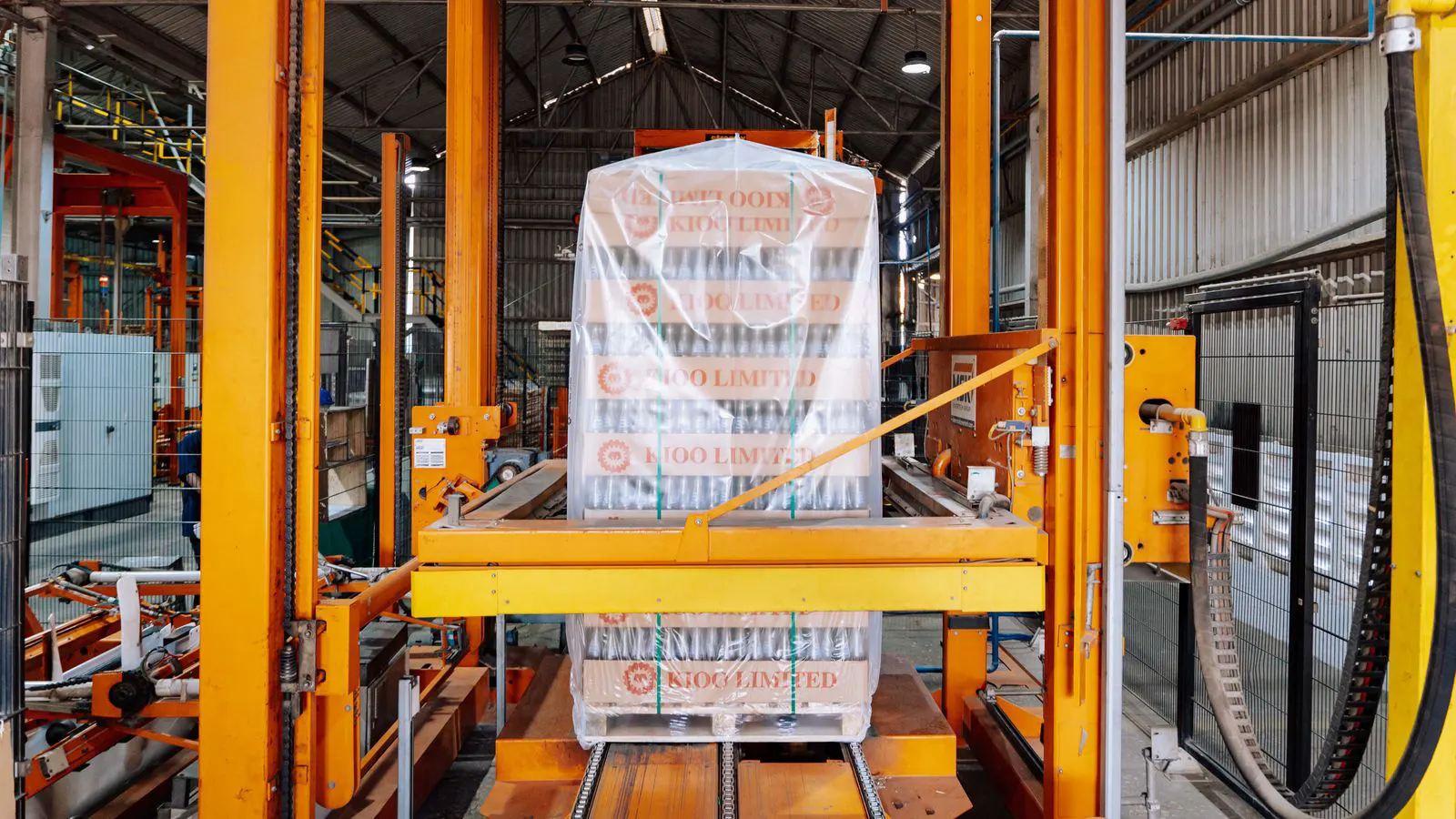
Palletizing machine cost depends on payload, speed, integration, and automation level. Lead times vary by complexity. This guide explains price drivers, delivery schedules, and how to structure a clear RFQ to compare vendor quotes fairly.
- Palletizing machine cost is driven by payload, speed, and required integration, not just the robot itself.
- Palletizer lead time increases significantly with custom software, conveyor interfaces, and site-specific modifications.
- A clear RFQ that defines product dimensions, throughput, and end-of-line requirements leads to more accurate and comparable quotes.
- Always evaluate total cost of ownership, including installation, training, and potential maintenance, rather than relying solely on the initial equipment price.
- Robotic palletizing budgets should account for floor space, utility connections, and operator interface requirements.
What Drives Palletizing Machine Cost?
The price of an automated palletizing system is rarely a simple sum of parts. It reflects the specific demands of your product, your production speed, and the level of integration required with existing equipment. Two identical palletizers can have very different price tags if one handles fragile, irregular shapes while the other moves uniform cartons at high speed.
When evaluating a palletizing machine cost, start with the mechanical requirements. The weight of the top box, the total payload capacity, and the size of the pallet determine the base frame and drive system. Heavier or larger pallets require stronger actuators and more robust structures, which directly increases the capital expenditure.
Software and vision systems also play a major role. A basic palletizer that follows a fixed pattern may be significantly cheaper than a system equipped with advanced camera vision to handle mixed SKUs or damaged boxes. If your line requires the machine to identify orientation, count units, or adapt to changing product dimensions, the cost will reflect the complexity of the control logic and sensor hardware.
Finally, consider the level of automation. A standalone palletizer that only handles the final loading stage costs less than a full integrated cell. If the system must pull products from a conveyor, sort them, and manage the pallet stack without operator intervention, the investment includes additional conveyors, sensors, and synchronization software.
How to Understand Palletizer Lead Time
Palletizer lead time is the period between a signed purchase order and the machine’s installation at your facility. Standard machines with off-the-shelf configurations often have shorter delivery windows, while custom-built systems can take several months longer.
The most significant factor in lead time is the level of custom engineering. If the supplier must design a unique frame, write bespoke control code, or develop specific vision algorithms, the schedule extends. These tasks often happen sequentially; for example, the frame cannot be finalized until the software requirements are understood.
Integration with existing plant infrastructure also impacts delivery. If the palletizer must connect to a specific conveyor system, ERP software, or SCADA network, the supplier needs time to coordinate with your internal engineers. Site preparation, such as electrical rough-in, floor load testing, and safety fencing, should be factored into the timeline.
It is common for suppliers to provide a manufacturing lead time and a separate installation window. Manufacturing might take eight to twelve weeks, while on-site installation and commissioning could require another two to four weeks. Always ask for a project schedule that breaks these phases down, as it helps you plan production downtime more effectively.
How to Structure a Clear RFQ
A Request for Quotation (RFQ) is the foundation of a fair comparison. Vendors cannot provide accurate pricing for a vague request. To get reliable numbers for your robotic palletizing budget, your RFQ must be precise and data-driven.
Start by listing your product specifications. Include the dimensions, weight, and fragility of the items to be palletized. Note if the products are packed in shrink wrap or if they have irregular edges. Specify the pallet size, such as standard 48x40 inches or 1200x1000 millimeters, and the maximum stack height.
Next, define your production requirements. State your target throughput in cases per hour and the shift pattern. If you run one, two, or three shifts, this affects the mechanical durability and duty cycle ratings you should request. Include any existing equipment the palletizer must interface with, such as the make and model of the upstream conveyor.
Finally, outline your facility constraints. Provide floor space dimensions, ceiling heights, and power availability. Mention any specific safety standards or software protocols your plant requires. A detailed RFQ reduces the number of back-and-forth questions, which accelerates the quoting process and ensures all vendors are working from the same baseline.
How to Compare Quotes Fairly
Receiving multiple quotes does not automatically guarantee a fair comparison. Vendors often package different options together, making it difficult to see what you are actually paying for. To compare quotes fairly, request itemized breakdowns.
Look for separate line items for the robot or mechanical frame, the control system, the vision or sensor package, and the integration services. This transparency reveals where one vendor might be underbidding by omitting essential components. For example, a low bid might exclude the software license for the palletizing pattern or the cost of the remote support subscription.
Pay close attention to the warranty and support terms. A slightly higher initial cost might be offset by a longer warranty period or included annual maintenance contracts. Ask about the availability of spare parts and the estimated response time for technical support.
Also, compare the delivery terms. One quote might include full installation and training, while another might only cover the equipment drop-off. Ensure you are comparing the total cost of delivery, not just the sticker price of the machine.
Cost Drivers and Delivery Time Table
Understanding the specific variables that influence pricing and scheduling helps you plan your budget and project timeline. The table below outlines the primary drivers for automated palletizing systems.
| Cost Driver | Description | Impact on Lead Time |
|---|---|---|
| Payload Capacity | Weight limit per pallet determines structural steel and drive strength. | Moderate; heavy-duty frames may require longer fabrication. |
| Product Complexity | Irregular shapes or mixed SKUs require advanced vision and software. | High; custom programming and testing take longer. |
| Throughput Speed | High cases-per-hour demands faster actuators and optimized cycles. | Moderate; high-speed validation adds to commissioning. |
| Integration Level | Connection to conveyors, ERPs, or SCADA systems. | High; requires coordination with IT and OT teams. |
| Automation Level | Degree of operator intervention vs. fully autonomous operation. | Moderate; more sensors and interfaces increase build time. |
How to Manage Budget for Robotic Palletizing
A robotic palletizing budget should extend beyond the purchase price. Consider the total cost of ownership, which includes installation, training, and long-term support. Installation costs can vary based on the complexity of the site and the need for custom civil or electrical work.
Training is another often-overlooked expense. Operators and maintenance technicians need to understand how to load patterns, clear jams, and perform basic troubleshooting. Request a training package that includes both classroom instruction and on-site hands-on coaching.
Maintenance costs depend on the machine’s design. Machines with sealed gearboxes or direct-drive systems may require less frequent service than those with open chains or belts. Ask for a recommended maintenance schedule and the cost of routine filter changes or lubrication.
Final Thoughts on Planning and Procurement
Selecting the right palletizing machine requires balancing cost, capability, and timeline. By clearly defining your product and production requirements, you can ensure that supplier quotes are comparable and accurate.
Focus on the total value of the system rather than the lowest initial price. A machine that integrates smoothly with your existing line and offers reliable support will provide better long-term returns than a budget option that requires extensive modifications. Use the information in this guide to structure your RFQ and evaluate offers with confidence.
Frequently asked questions
What is the typical palletizer lead time?
Lead times vary, but standard systems often take eight to twelve weeks to manufacture. Custom or highly integrated systems may take longer due to engineering and site preparation.
How does product weight affect palletizing machine cost?
Heavier products require stronger frames and drives, increasing the mechanical cost. The maximum payload capacity is one of the primary factors in determining the base price of the machine.
Can I get an accurate quote without detailed product data?
No. Vendors need specific dimensions, weights, and throughput numbers to size the machine correctly. Without this data, quotes are often estimates and may not be directly comparable.
What is included in a standard robotic palletizing budget?
A complete budget should cover the machine, installation, software licenses, operator training, and initial spare parts. Excluding these items can lead to unexpected costs during the project.
How do I compare vendor quotes if they are not itemized?
Request a breakdown of costs for hardware, software, and services. If a vendor refuses to itemize, it may indicate hidden costs or a lack of transparency in their pricing structure.