Buyers Guide to Industrial Palletizing Systems
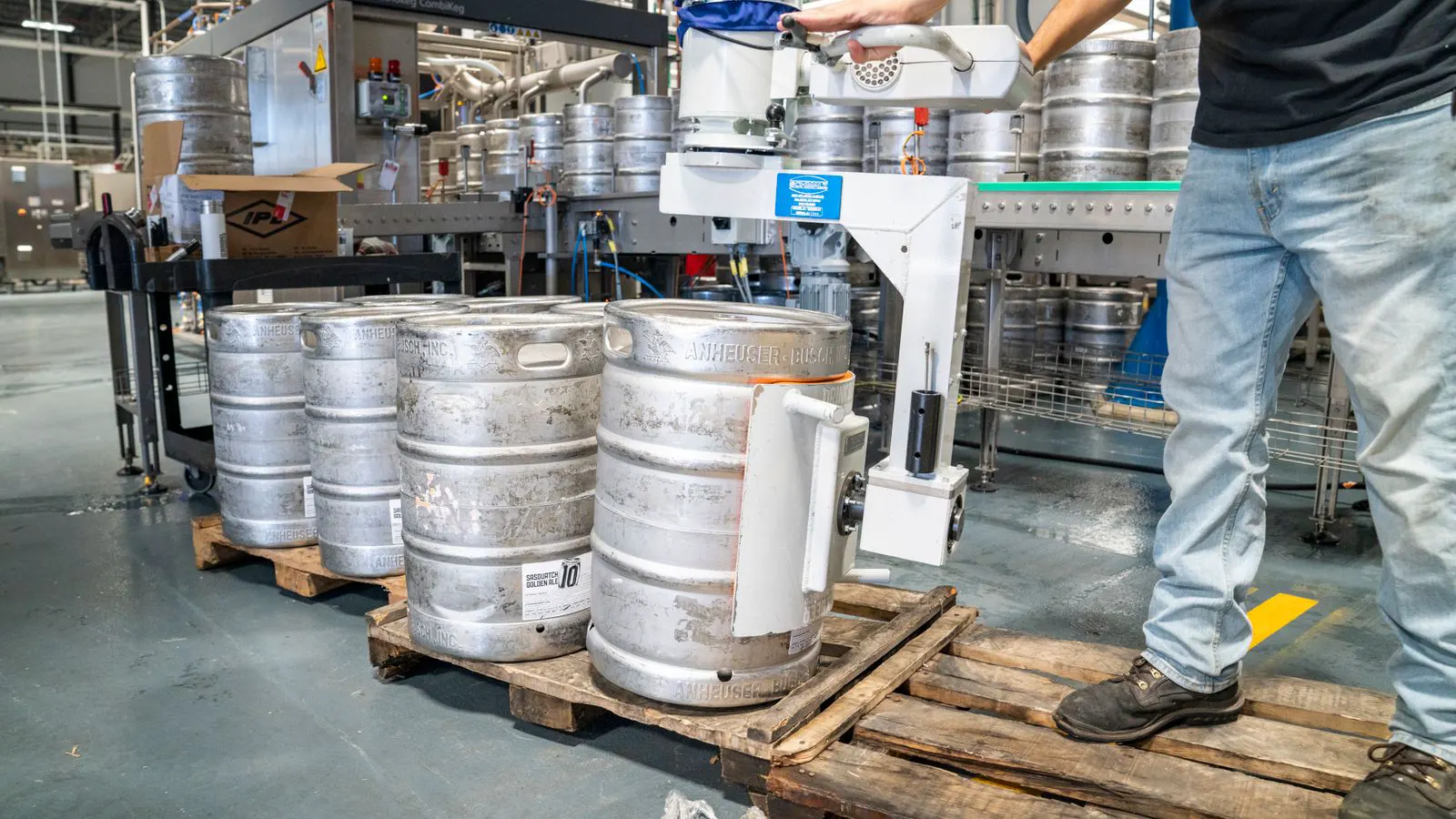
Selecting industrial palletizing systems requires matching machine payload, pattern complexity, and cycle time to your specific line constraints. This guide outlines key specifications to evaluate, supplier vetting criteria, and a final decision checklist for buyers.
- Define your payload, pattern, and cycle time targets before contacting suppliers.
- Verify supplier service capacity and spare parts availability in your region.
- Test the machine with your actual product mix during the demo phase.
- Review integration costs for conveyors, PLCs, and vision systems.
What specifications define an industrial palletizing system
An industrial palletizing system is not a single part. It is a combination of a robot or gantry, a conveyor infeed, a pattern engine, and a control system. Before you request quotes, you need to know exactly what those components must handle.
Start with payload. The machine must carry your product plus the pallet. A standard 4000 pound class robot and a lighter 1000 pound class unit will have different footprints and different installation requirements. If your product is dense, like canned goods, the weight of a single case may exceed what a light machine can safely handle. If your product is light, like air-filled pouches, the machine must handle large volumes without losing precision.
Next is the pattern complexity. A simple two-layer pattern for uniform boxes requires less control logic than a complex interlocking pattern for mixed SKUs. The software that builds the pattern is as important as the mechanical arm. If you change product dimensions often, the pattern engine must allow quick updates without a full reprogram.
Finally, look at cycle time. This is the number of cases placed per minute. A high speed machine may use a larger footprint and a more complex infeed. A low speed machine may be simpler to maintain but will require more labor or a longer shift to meet your target.
How to match the machine to your product mix
The product mix is where many buyers make errors. They select a machine based on their best case and ignore the worst case. You must define your worst case product. Is it a soft-sided pouch that shifts on the infeed? Is it a rigid case that creates vibration? Is it a product that requires a specific orientation?
If your product mix is stable, a dedicated single-axis or two-axis palletizer may be sufficient. It is often simpler to maintain and cheaper to buy. If your mix changes weekly, a four-axis system with a vision system allows the machine to see the product and place it correctly regardless of orientation.
The infeed is a critical part of this match. If your infeed is a simple belt, the machine must handle any variation in product position. If you add a centering device or a guide rail, the machine can be less forgiving. The infeed and the palletizer are a system. They must be designed together.
What to look for in the control and software
The control system dictates how easy the machine is to operate. A basic system may use a fixed pattern that you cannot change without calling the vendor. A more advanced system uses a graphical interface where you can drag and drop pattern blocks.
Look for the following in the software:
- Pattern editor with drag and drop blocks.
- Product database for storing multiple SKU configurations.
- Cycle time logging to track performance over time.
- Error logging that shows exactly what failed and when.
The interface should allow a production operator to change the product code and start the line without calling an engineer. If every change requires a vendor visit, your uptime will suffer.
The pattern engine should also support “stacking logic.” This is the rule that determines how the next case sits on top of the previous one. A simple rule places the case directly above the previous one. A complex rule may rotate the case to fill gaps or create a stable base. The more complex the rule, the more likely the machine is to make a misplacement error if the infeed is not aligned.
Supplier evaluation criteria
Buying the machine is only half the decision. The other half is the supplier. A cheap machine from an unreliable supplier will cost you more in downtime than a premium machine from a responsive vendor.
| Criterion | What to look for | Why it matters |
|---|---|---|
| Service Response Time | Local or regional service engineers | Fast repair means less lost production |
| Spare Parts Stock | Common parts kept in stock | Reduces waiting time for repairs |
| Installation Support | Vendor team installs and trains | Ensures the machine runs at spec |
| Software Updates | Regular firmware and pattern updates | Keeps the machine compatible with new products |
| Warranty Terms | Length and scope of labor coverage | Protects your investment during the first years |
Check the service contract before you sign the purchase order. A machine without a service plan is a risk. You want a supplier who can send a technician to your site within 24 to 48 hours. If they are overseas, ask about their local partner. A local partner is often better than a direct vendor if they have parts in a nearby warehouse.
Also, ask about their training program. Do they train your operators? Do they provide documentation? A good supplier will ensure your team can run the machine independently. If they rely on you calling them for every basic task, you have a dependency problem.
Integration and facility constraints
Before you buy, measure your space. The palletizer needs room to move. It needs an infeed conveyor, a pallet lift or roller table, and an outfeed. It also needs room for maintenance. You cannot install a machine in a tight corner and expect to service it easily.
Check your power supply. High speed palletizers often require three phase power. If you only have single phase, you may need a transformer. This is a cost and a space issue.
The floor must be level. A palletizer that is not level will have alignment issues. The infeed and the palletizer must be at the same height. If they are not, you will need a transition conveyor. This adds cost and complexity.
Look at the building height. Some four-axis machines are tall. If your ceiling is low, you may need a different model. Measure from the floor to the highest point of the machine, including the infeed and the palletizer arm.
A checklist for your final decision
Use this checklist when you are ready to sign the contract. It forces you to verify the details that matter.
- Does the machine handle the worst case product in your mix?
- Is the pattern editor easy enough for your operators to use?
- Can the supplier provide service within 24 hours of a failure?
- Are the spare parts for your specific model available locally?
- Does the machine fit your floor space and ceiling height?
- Is the power supply compatible with the machine requirements?
- Does the supplier provide training and documentation?
- Is the warranty clear and written down?
- Have you tested the machine with your actual product?
- Do you have a plan for the infeed and outfeed conveyors?
If you can answer yes to these, you are ready to proceed. If you have a doubt on any of them, do not sign yet. Ask the supplier to clarify. A good supplier will answer questions directly. If they give vague answers, that is a warning sign.
Final thoughts on the buying process
The buying process for industrial palletizing systems is a partnership. You are not just buying a machine. You are buying a process. The machine, the infeed, the software, and the service team all work together. If one part fails, the whole process stops.
Take your time with the evaluation. Do not let the sales team rush you. Ask for a demo with your product. If they cannot do that, be cautious. A machine that works in a demo with a dummy box is not the same as a machine that works with your real product.
The right machine will save you time and labor. It will also reduce errors and damage. The wrong machine will cost you in downtime and frustration. Use the criteria in this guide to make a clear, informed decision.
Frequently asked questions
How long does a standard palletizer installation take?
Installation usually takes one to two weeks. This depends on the complexity of the infeed and the condition of your facility. A simple installation on a ready floor may take a few days.
Can I use a palletizer for mixed product sizes?
Yes, but it requires a more advanced pattern engine. Simple machines work best with uniform cases. If your sizes vary, look for a system with a vision component that can detect product dimensions.
What is the most common reason for palletizer failure?
Misfeeds from the infeed are the most common cause. If the product is not aligned before it reaches the palletizer, the machine will place it incorrectly. This often leads to sensor errors and stops.
Do I need a separate palletizer for each product type?
No. A single machine can handle multiple products if the software supports multiple patterns. You just need to change the product code and the pattern settings.
How do I know if a supplier is good?
Check their service response time and spare parts availability. Ask for references from other customers in your region. A good supplier will provide these details without hesitation.